The Experiment That Started ICEYE
A tent, scaffolding, and a question: 'What if?' That's how ICEYE started. Now 70+ micro-SAR satellites circle the planet, making the invisible visible. True Partner Rohit Sharma looks back at the team’s ingenuity from start to (unfinished).
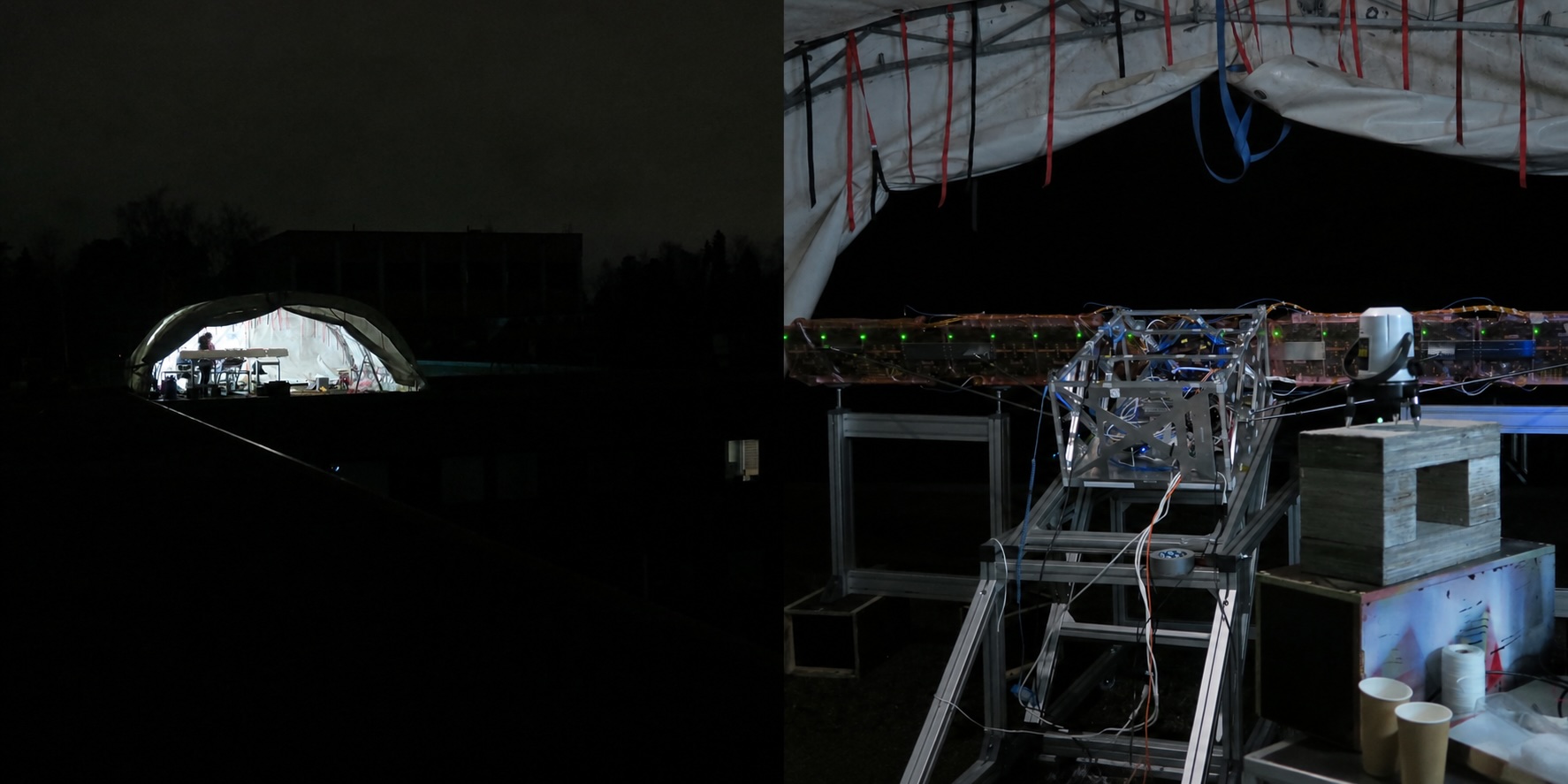
Yes, that’s a satellite.
On a rooftop. In a tent.
Not on a rocket, not in space.
You might ask why?
Because the best engineering innovations rarely start with a plan. They start with a question — short, slightly irresponsible, and usually asked by someone who should know better: ‘What if?’
What if we could ‘see’ the International Space Station in orbit with our SAR satellite prototype?
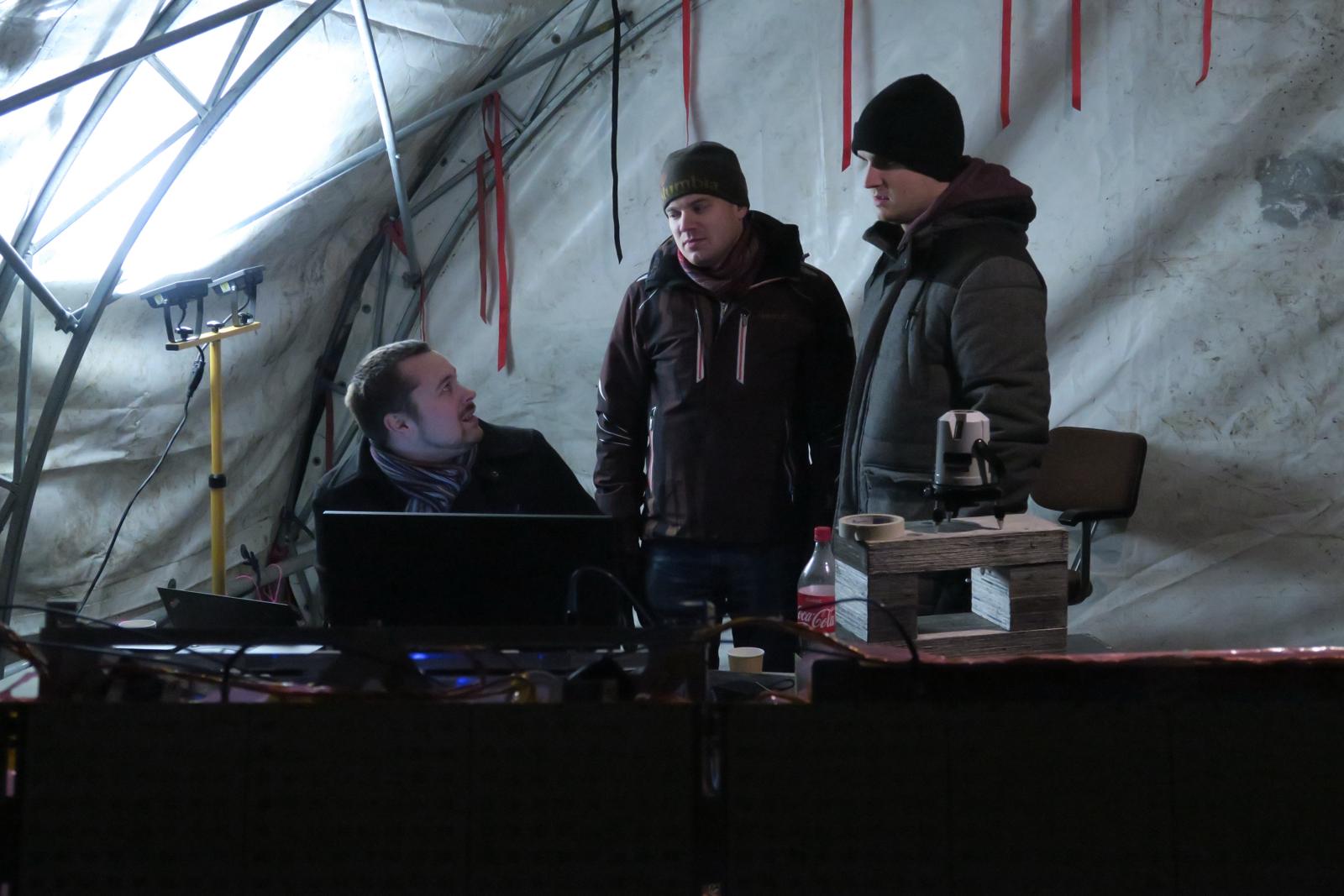
The answer to most good questions is not yes, it’s ‘let’s find out’. And a few ICEYE engineers hauled an early prototype of their micro synthetic-aperture radar onto the office roof, put it under a white tent that looked one gust away from resignation, tied the whole thing to scaffolding, and waited for the International Space Station to clear the horizon to build an answer to that question.
There was a plan of course: take a radar designed to look down from orbit and make it look up instead — at a 400-tonne laboratory moving roughly 7.6 kilometers per second, 400 kilometers overhead. Well actually… given Helsinki’s location, much farther away barely up from the southern horizon and closer to 950km away.
This is both absurd and exactly the point.
The interesting point is that radar creates the measurement that matters. It sends energy into an indifferent geometry, waits for a faint return, and reconstructs meaning from delay, phase, Doppler, noise, and motion. Nothing is handed to it whole.
The image is earned.
Fine radar resolution usually requires a large antenna. SAR is elegant: as the radar moves, it collects echoes over time and combines them into the effect of a much larger antenna. Motion becomes aperture. Time becomes resolution. Small hardware gets to behave like something bigger than it has any right to be.
Which is also the startup playbook, minus the equations.
Visionary founders work with that initial faint signal of what’s possible among the various ‘what ifs’.
For True Ventures, our entire partnership and fund structure is systematically designed to find these founders and be the first to believe.
They do not win because they are smaller. Small is not a strategy; it’s usually just a constraint. They win when they turn that constraint into an instrument — when they build the crude first apparatus that makes a hidden signal measurable at all. A sensor that turns darkness into data. A rooftop radar that says: yes, there is something there.
A small team cannot out-mass incumbents. The team does not pretend to be big. It moves coherently enough that velocity does the work mass usually does.
That night, the geometry also had a joke built in – not the funny kind, an engineering one. In normal SAR, the radar moves and the target mostly holds still. On the roof, the radar stayed put and the ISS supplied the motion. More inverse-SAR than textbook SAR. Same instinct: use motion as information. Let physics do the thing your hardware cannot do alone.
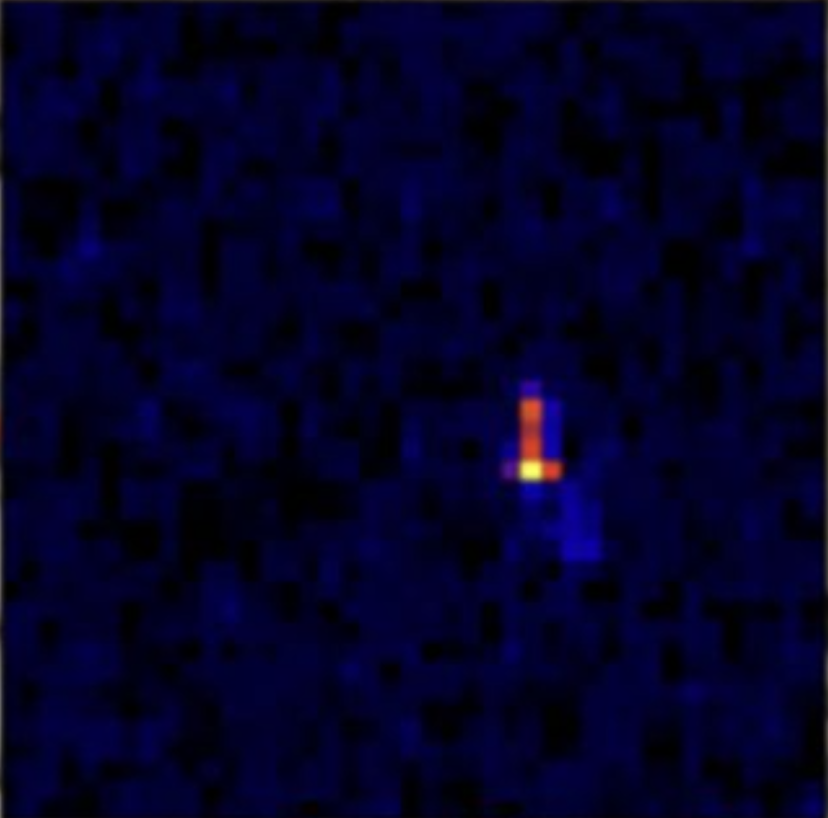
And then on their laptops, among the cold blue pixels, a clear crisp signal that makes the journey worth the long haul. This is a glorious image of the Space Station, not seen by reflected sunlight, but by microwave energy pulsed upward from a rooftop in Finland and caught on the way back.
Somewhere off-camera, I hope, someone said something unprintable, in Finnish.
This story is inspiring because the experiment was cheap, fast, and answerable.
The ISS pass was free.
The physics is always unforgiving, but on this night in these hands, it was on their side.
That is the useful lesson: find the smallest ridiculous experiment that can tell you whether nature and physics is on your side, then run it before the organization learns how to say no.
A prototype. A tent. Some scaffolding. A few minutes of orbital cooperation.
Not a roadmap. A question.
And from that question, you can draw a straight line to 70+ micro SAR satellites now circling the planet, imaging floods, ice, ships, forests, and infrastructure through clouds and darkness. This capability that once belonged mostly to governments is now accessible to every person on our planet, built by people willing to ask ‘what if?’ and then climb onto the roof to find out.
The leap from ‘what if?’ to ‘well, that’s obvious’ rarely comes from institutions optimized for being reasonable or even at the time of inception of that question. It comes from engineers, stubborn engineers who refuse to accept that the night is opaque, or that small means incapable. They willingly put satellites on the roof if need be, before they go on rockets.
That night, ICEYE engineers made the invisible visible, initiating an arc that is ten years and counting of great engineering.
They make impossible possible.